A PRACTICAL GUIDE FOR SENIORS AND FAMILIES
Downsizing a home can feel overwhelming, especially when it means sorting through belongings collected over decades. Whether you are preparing for a move to a smaller home, condo, retirement community or assisted living residence, it can be difficult to know where to begin.
The good news is that you don’t have to make every decision at once.
A successful downsizing project is usually easier when it is broken into smaller, manageable steps. This senior downsizing checklist can help you create a plan, decide what needs your attention first and move forward at a pace that feels comfortable.
Jump to: Plan your move · Sort what to keep · Prepare the details · Pack and settle in · Quick checklist
1. Start With Your Timeline
Before opening closets or sorting through boxes, start by looking at the bigger picture.
Ask yourself:
- Is there a moving date?
- Do you already know where you are moving?
- How much smaller is the new home?
- Are there family members who will be helping?
- Are there belongings that need to be distributed to family?
- Will you need professional help with organizing, packing or moving?
If there is a firm moving date, work backward from it. Give yourself more time than you think you will need, particularly if you have lived in your home for many years.
Whenever possible, avoid leaving the majority of the sorting until the final few weeks before a move. Making dozens of decisions under time pressure can quickly become exhausting.
2. Learn About Your New Space
Knowing what will realistically fit in your new home can make downsizing decisions much easier.
If you have access to the new space, find out:
- The size of each room
- Closet and storage space
- Kitchen cupboard space
- Whether there is additional storage
- Which pieces of furniture will fit
- What appliances or furniture are already provided
A floor plan can be particularly helpful.
Measure larger pieces such as sofas, dining tables, beds, dressers and bookshelves before deciding to move them. A favourite piece of furniture may be important to you, but it also needs to work comfortably in the new space.
Instead of asking only, “Do I want to get rid of this?”, it can be easier to ask, “Do I want this to have a place in my new home?”
That small change in perspective can make decisions feel more positive.
3. Make a Simple Downsizing Plan
You don’t need to organize the entire house at once.
Create a list of rooms or categories and work through them gradually. Depending on your home, your list might include:
- Kitchen
- Living room
- Bedrooms
- Bathrooms
- Closets
- Home office
- Garage
- Storage locker
- Basement
- Photos and memorabilia
- Important paperwork
You can then divide larger areas into even smaller projects.
Instead of writing “sort the kitchen,” for example, start with one pantry shelf, one drawer or one cupboard.
Small, clearly defined projects make progress easier to see and can help prevent decision fatigue.
4. Start With the Easier Areas
It can be tempting to begin with family photographs, heirlooms or boxes that have not been opened in decades.
Those are often the hardest places to start.
Instead, begin somewhere with relatively simple decisions. A bathroom, linen cupboard, pantry or utility closet can be a good first project.
Look for obvious items such as:
- Expired products
- Broken items
- Things you no longer use
- Unwanted duplicates
- Worn-out linens
- Items that belong somewhere else
- Things that can easily be donated or recycled
Making easier decisions first helps build momentum before you move on to more emotional belongings.
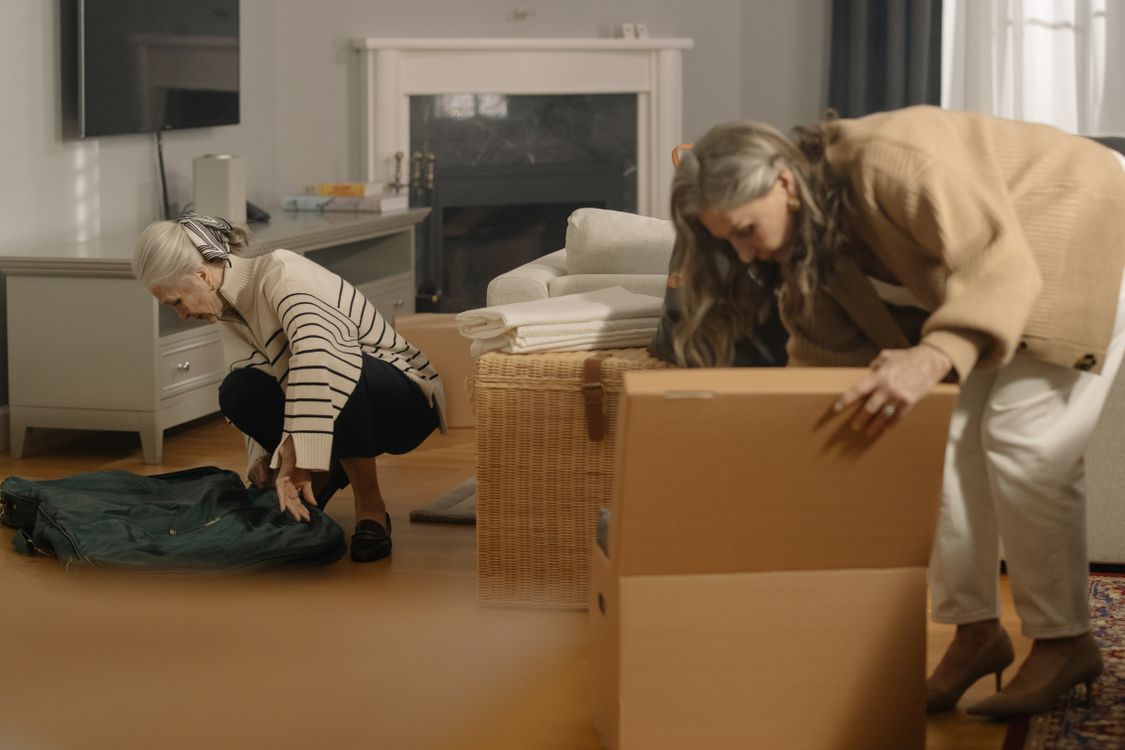
5. Decide What You Want to Keep
Downsizing isn’t about getting rid of as much as possible. It is about choosing the belongings that will best support your life in your new home.
When deciding whether something should move with you, consider:
- Do I use this regularly?
- Do I genuinely enjoy having it?
- Does it have important sentimental value?
- Will it fit comfortably in my new home?
- Do I already have another item that serves the same purpose?
- Would I choose to bring this into my home if I were starting fresh today?
You don’t need to keep something simply because you have owned it for a long time.
At the same time, there is no rule saying you have to part with belongings that are genuinely meaningful to you.
The goal is to create a home that feels comfortable, functional and familiar.
6. Deal With Duplicates
Duplicates are often one of the easiest ways to reduce the volume of belongings.
You may discover that you own several versions of:
- Kitchen utensils
- Pots and pans
- Towels
- Bedding
- Serving dishes
- Cleaning supplies
- Tools
- Office supplies
- Small appliances
If your new home has less storage, choose the versions you use most often or like best.
You probably don’t need six frying pans or five sets of sheets in a smaller home.
7. Create Clear Categories
As you sort, give every item a destination.
A simple system might include:
Keep — Items moving with you.
Family or friends — Items you would like to offer to someone you know.
Donate — Useful belongings that could benefit someone else.
Sell — Items that may realistically be worth the time and effort required to sell them.
Recycle — Items that can be responsibly recycled.
Dispose — Items that cannot reasonably be reused.
Not sure — A temporary category for genuinely difficult decisions.
Try not to let the “not sure” category become too large. It is useful for keeping a project moving, but those items will eventually need another decision.
8. Talk to Family Early
If there are belongings you hope children, grandchildren or other relatives will take, ask them early in the process.
Sometimes we hold onto things because we assume a family member will eventually want them. Their answer may surprise you.
Rather than deciding for them, ask.
It can also help to set a deadline for family members to collect items they have chosen. Otherwise, your home can unintentionally become temporary storage for belongings that you are trying to remove.
For particularly meaningful family items, take your time and make sure everyone understands what is being distributed.
9. Be Realistic About Selling Belongings
It is common to assume that furniture, china, collectibles, books or antiques will be easy to sell.
Unfortunately, resale values and demand do not always match what an item originally cost or what it means to the family.
Before setting aside large numbers of things to sell, consider:
- Is there actually a market for the item?
- How much is it realistically worth?
- Where would you sell it?
- Who will photograph and list it?
- Who will communicate with buyers?
- How long are you willing to store it?
Selling a few higher-value belongings can make sense. Trying to sell hundreds of smaller items may create more work than value.
Donation can sometimes be the simpler and more satisfying option.
10. Take Your Time With Sentimental Belongings
Photographs, letters, children’s artwork, souvenirs and family heirlooms often require more time than everyday household items.
Don’t begin a downsizing session with your most emotional possessions if you can avoid it.
Instead, set aside specific time for them.
You might choose to:
- Keep a smaller selection of favourite photographs
- Digitize photographs or documents
- Give meaningful objects to family members
- Create a memory box
- Photograph an item before letting it go
- Keep one representative item from a larger collection
Remember that your memories are not measured by the number of objects you keep.
But there is also no need to rush these decisions.
11. Review Important Documents
Downsizing is a good opportunity to organize paperwork.
Look for important documents such as:
- Identification
- Financial records
- Insurance information
- Wills and estate documents
- Property records
- Medical information
- Tax records
- Legal documents
- Important contact information
Keep essential paperwork somewhere secure and easy to find during the move.
Old paperwork containing personal information should be shredded rather than simply placed in recycling.
12. Think About Safety and Accessibility
Downsizing is also an opportunity to make the new home easier and safer to live in.
When choosing what to bring and how the new space will be arranged, consider:
- Clear walking paths
- Easy access to frequently used belongings
- Adequate lighting
- Furniture placement
- Tripping hazards
- Storage that doesn’t require difficult reaching or climbing
- Everyday items stored within comfortable reach
A smaller home can work extremely well when it is organized around how you actually live.
13. Plan What Happens to Items That Aren’t Moving
Try to decide how unwanted belongings will leave the home before moving day approaches.
Depending on the items, this could include:
- Giving belongings to family or friends
- Donating to local charities
- Selling selected items
- Recycling
- Arrange for appropriate disposal
- Scheduling junk removal if necessary
Having a plan prevents unwanted belongings from simply moving from one home to another—or ending up in a storage locker indefinitely.
14. Pack Only After You Have Decluttered
Whenever possible, finish most of your downsizing decisions before serious packing begins.
Packing everything first simply means paying to move belongings that you may ultimately decide you don’t need.
Once you know what is coming with you, label boxes clearly by room and contents. Consider identifying a few boxes as “open first” with essentials you will want immediately after the move.
Professional packing and unpacking services can also help when the physical work, volume of belongings or moving timeline becomes difficult to manage.
15. Make a Plan for Moving Day
Keep essentials separate from the main household shipment.
Your moving-day bag might include:
- Medication
- Identification
- Important documents
- Phone and charger
- Toiletries
- A change of clothes
- Basic kitchen items
- Snacks and water
- Keys
- Anything you will need that evening or the following morning
Knowing where these essentials are can make the first day in your new home considerably easier.
16. Plan for Unpacking and Settling In
The downsizing process doesn’t end when the boxes arrive.
A thoughtful unpacking plan can help the new home feel comfortable much sooner.
Start with the areas needed for everyday life:
- Bedroom
- Bathroom
- Kitchen
- Clothing
- Frequently used living areas
Set up essential items first. Decorative objects, books and less frequently used belongings can wait.
This is also a good opportunity to create simple organizing systems so that everyday items are easy to find and put away.
When Should You Start Downsizing?
There is no perfect timeline because every home and situation is different.
However, starting early gives you more choices.
When possible, begin before there is an urgent deadline. Even spending a few hours each week can make a significant difference over several months.
If a move is approaching quickly, focus first on the decisions that affect the move itself: what will fit, what needs to come with you and what needs to leave the home.
A Simple Senior Downsizing Checklist
Before the move, make sure you have:
☐ Confirmed your moving timeline
☐ Obtained measurements or a floor plan of your new home
☐ Identified the furniture you are taking
☐ Sorted belongings room by room
☐ Asked family members about items they may want
☐ Selected items to donate, sell, recycle or dispose of
☐ Organized important documents
☐ Created a plan for sentimental belongings
☐ Decluttered before packing
☐ Arranged packing and moving help if needed
☐ Prepared a moving-day essentials bag
☐ Planned how your new home will be organized
Most importantly, give yourself permission to take the process one step at a time.
You Don’t Have to Downsize Alone
Downsizing can involve hundreds of practical decisions, but it can also be an emotional transition. Having an independent person there to help can make the process easier for both seniors and their families.
Harmony Home Organizing provides professional downsizing services for seniors in Metro Vancouver and Greater Victoria. We can help you create a plan, sort and declutter belongings, prepare for your move, coordinate packing and help organize your new home.
Whether you are planning well in advance or facing an upcoming move, we can help you break the project into manageable steps and move forward at a pace that works for you.
Ready to get started? Contact Harmony Home Organizing or book a free consultation to talk about your downsizing needs.